
Eugenics
https://en.wikipedia.org/wiki/Eugenics
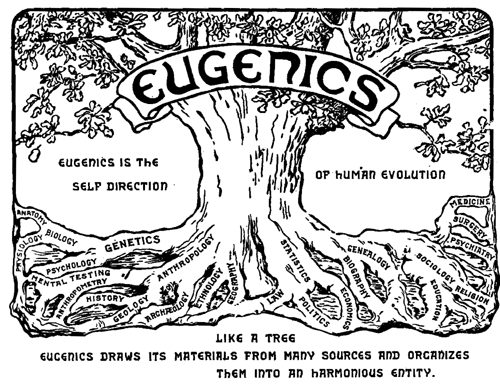
While eugenic principles have been practiced as far back in world history as Ancient Greece, the modern history of eugenics began in the early 20th century when a popular eugenics movement emerged in the United Kingdom[8] and spread to many countries, including the United States and most European countries. In this period, eugenic ideas were espoused across the political spectrum. Consequently, many countries adopted eugenic policies meant to improve the genetic stock of their countries. Such programs often included both "positive" measures, such as encouraging individuals deemed particularly "fit" to reproduce, and "negative" measures such as marriage prohibitions and forced sterilization of people deemed unfit for reproduction. People deemed unfit to reproduce often included people with mental or physical disabilities, people who scored in the low ranges of different IQ tests, criminals and deviants, and members of disfavored minority groups. The eugenics movement became negatively associated with Nazi Germany and the Holocaust—the murder by the German state of approximately 11 million people—when many of the defendants at the Nuremberg trials attempted to justify their human rights abuses by claiming there was little difference between the Nazi eugenics programs and the US eugenics programs.[9] In the decades following World War II, with the institution of human rights, many countries gradually abandoned eugenics policies, although some Western countries, among them Sweden and the United States, continued to carry out forced sterilizations.





Leave a comment: